Neetish Kumar Maurya At first the viscosity is following simple trend ie viscosity is decreased when temperature is increased which might happen due to increases in Brownian motion of droplets. Effect of temperature on viscosity of fluidsThe viscosity of liquids decreases with increase in temperatureThe cohesive forces between molecules of liquids.

Viscosity Of A Liquid Increases With The Decrease In Temperature And Download Scientific Diagram
With high temperatures viscosity increases in gases and decreases in liquids the drag force will do the same.

Temperature increases viscosity decreases. For gases viscosity increases as temperature increases while in liquids the additional force between molecules become important hence viscosity tends to fall as temperature increases. Click to see full answer. B The viscosity of gases increases with temperature whereas the viscosity of liquids decreases with temperature.
As a liquid is heated the viscosity decreases. I drew the conclusion that when a substance is heated its molecules move farther apart and faster so therefore if the molecules are moving farther apart the substance will expand. Such fluids are technically said to be viscous or viscid.
Polymer viscosity is affected by water salinity and divalent ions such as calcium Ca 2 and magnesium Mg 2 which decrease the viscosity of the polymer solution. In a liquid the increased temperature causes the molecules to move faster which means that they spend less time pressing. In other words increasing gas temperature causes the gas molecules to collide more often.
The warmer the gas the slower it flows. Hence as the temperature increases the viscosity will increase. Asked by Wiki User.
The result is that liquids show a reduction in viscosity with increasing temperature. Gas and liquid decreases. In Other words an increase in temperature causes a decrease in surface tension and viscosity.
The viscosity of a liquid decreases as the temperature is raised while the viscosity of a gas increases as the temperature is raised. Similarly the viscosity of gases is linearly proportional to the temperature. Zero viscosity is observed only at very low temperatures in superfluids.
Polymer viscosity is affected by a number of factors such as the salinity temperature concentration molecular weight and shear rate. Just the opposite effect as in. The viscosity of the liquid tends to decrease with the temperature increase while in gases viscosity increases with rising temperature.
Impact of Increasing Temperature The impact of increasing temperature will be to slow down the sphere in gases and to accelerate it in liquids. As the temperature increases the molecules carry more momentum and collide more often that means more viscosity for gas. The temperature effect on viscosity is different for liquid and gas.
As the temperature increases the time of interaction between neighboring molecules of a liquid decreases because of the increased velocities of individual molecules. With high temperatures viscosity increases in gases and decreases in liquids the drag force will do the same. A fluid with a high viscosity such as pitch may appear to be a solid.
Gases increases and liquid decreases The viscosity of liquid is inversely proporional to the square of the temperature therefore as we increase the temperature the viscosity of liquids will decrease. The warmer the liquid the faster it flows. This is due to the fact that at high temperatures the molecules are at high kinetic energies hence reducing the coherent forces.
For AS Level physics I had to do some coursework on the viscosity of Honey. When the temperature is increased iViscosity of the gas increases iiViscosity of the gas decreases iiiViscosity of the liquid decreases ivviscosity of the liquid increases Apne doubts clear karein ab Whatsapp par bhi. Otherwise the second law of thermodynamics requires all fluids to have positive viscosity.
Wiki User Answered 2011-07-29 104429. This increases the gas viscosity because the transfer of momentum between stationary and moving molecules is what causes gas viscosity. Viscosity in gases arises principally from the molecular diffusion that transports momentum between layers of flow.
C For solids with elastic modulus of rigidity the shearing force is proportional to shear strain while for fluids it is proportional to the rate of shear strain. Viscosity increases as temperature increases. As temperature increases viscosity and surface tension decrease because the raise in temperature speeds up the molecules and the movement makes the.
I found out that as the temperature of the honey increases its viscosity decreases.
Fluid Dynamics Does The Temperature Of Water Affect Its Viscosity Why Quora
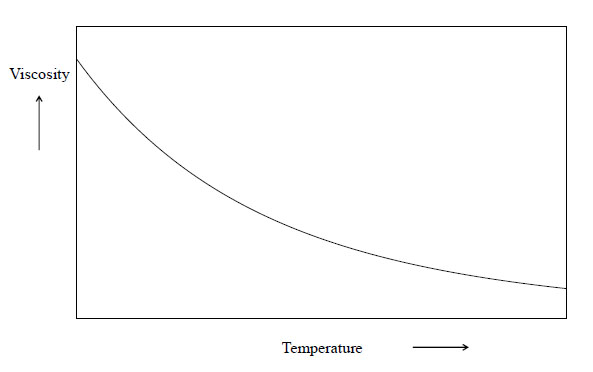
Doitpoms Tlp Library Tribology The Friction And Wear Of Materials Viscosity

How To Reduce Viscosity Of Water Quora
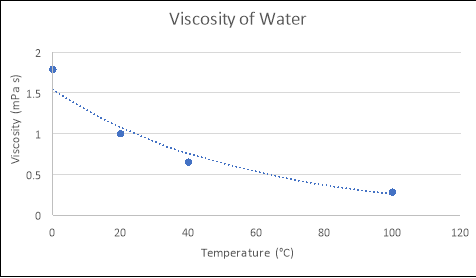
Impact Of Temperature On Viscosity Of Liquid

Viscosity Density We Know A Key Part Of Fluids Is Their Ability To Flow Viscosity How Quickly They Flow Is Known As Viscosity Your Turn Best Ppt Download
Viscosity Surface Tension And Temperature Science Project Education Com
Temperature Vs Viscosity Density Fig 2 Shows A Graph Between The Download Scientific Diagram
Dynamic Viscosity Decrease When Increasing The Lubricant Temperature Download Scientific Diagram
Why Does The Viscosity Of Liquids Decrease With Increasing Temperature While That Of Gases Increases With Increasing Temperature Quora
What Is The Relationship Between Temperature And Viscosity Of Liquids Quora
What Is The Effect Of Temperature On Viscosity Of Gas Quora

Why Does Viscosity Of Liquids Decrease With Temperature Quora

Apparent Yield Stress Increasing Temperature Decreases Viscosity And Download Scientific Diagram

Viscosity Surface Tension And Temperature Science Project Education Com