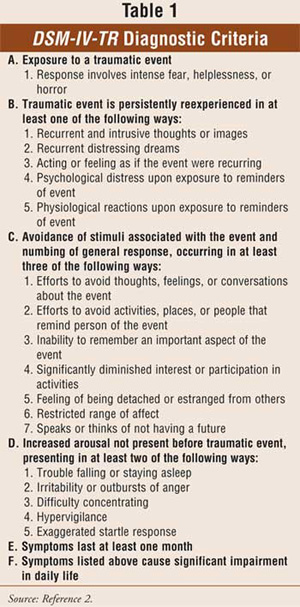
Duration of symptoms less than six months. The person has been exposed to a traumatic event in which both of the following were present.

Posttraumatic Stress Disorder Making The Diagnosis Consultant360
DSM IV - TR.
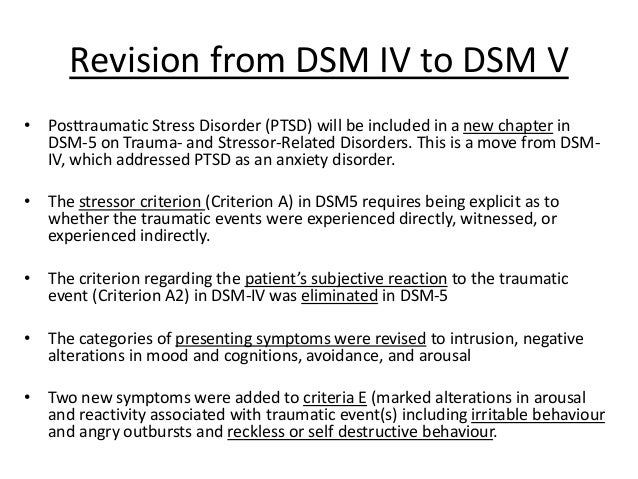
Post traumatic stress disorder criteria dsm iv. Post-traumatic Stress Disorder Chronic or Delayed. The person experienced witnessed or was confronted with an event or events that involved actual or threatened death or serious injury or a threat to the physical integrity of self or others. Changes to the diagnostic criteria from the DSM-IV to DSM-5 include.
AExposure to actual or threatened death serious injury or sexual violence in one or more of the following ways. The DSM-IV two-part definition of posttraumatic stress disorder PTSD widened the variety of stressors A1 and added a subjective component A2. Directly experiencing the traumatic events.
Estimates of prevalence and criteria comparison versus DSM-IV-TR in a non-clinical sample of earthquake survivors J Affect Disord. Post-traumatic stress disorder in DSM-5. The relocation of PTSD from the anxiety disorders category to a new diagnostic category named Trauma and Stressor-related Disorders the elimination of the subjective component to the definition of trauma the explication and tightening of the definitions of trauma and exposure to it the increase and rearrangement of the symptoms criteria.
Duration of symptoms six months or more chronic onset of symptoms at least six months after the trauma delayed. Persistent and elevated negative evaluations about yourself others or the world for example I am unlovable or The world is an evil place Elevated self-blame or blame of others about. Post-traumatic Stress Disorder Acute.
DSM-5 Criteria for Posttraumatic Stress Disorder PTSD Updated 2019. The person experienced witnessed or was confronted with an event or events that involved actual or threatened death or serious injury or a threat to the physical integrity of self or others. Onset of symptoms within six months of the trauma.
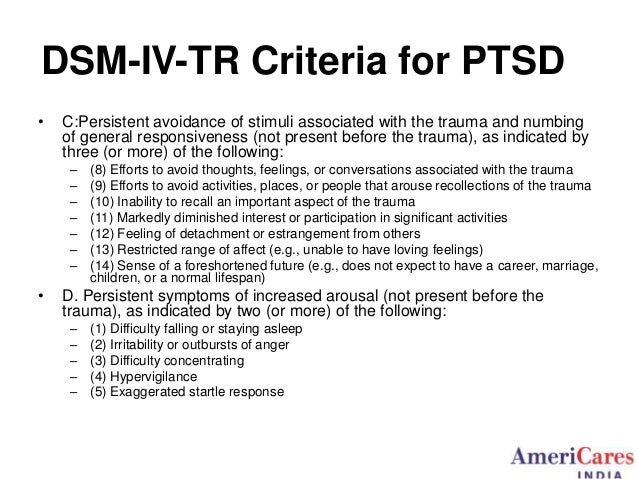
The persons response involved intense fear helplessness or horror. Criterion C avoidance and Criterion D negative alterations in cognitions and mood. The avoidance and numbing cluster Criterion C in DSM-IV was separated into two criteria in DSM-5.
1 The person experienced witnessed or was confronted with an event or events that involved actual or threatened death or serious injury or a threat to the physical integrity of self or others. Or witnessing an event that involves death injury or a threat to another person. Posttraumatic Stress Disorder DSM-IV-TR 30981 Posttraumatic stress disorder PTSD formerly known as traumatic neurosis may occur in practically anyone who has been exposed to an overwhelmingly traumatic event.
Subsequent to the trauma whether it be a life-threatening accident torture a natural disaster or some other. The person has been exposed to a traumatic event in which both of the following have been present. The essential features of Posttraumatic Stress Disorder is the development of characteristic symptoms following exposure to an extreme traumatic stressor involving direct personal experience of an event that involves actual or threatened death or serious injury or other threat to ones physical integrity.
The effects of the revised stressor criterion on estimates of exposure and PTSD in a community sample are evaluated. The person has been exposed to a traumatic event in which both of the following have to be present. Either of the following or both.
1 the person experienced witnessed or was confronted with an event or events that involved actual or threatened death or serious injury or a threat to the physical integrity of self or others 2 the persons response involved intense fear helplessness or horror. These criteria are obsolete. Avoidance of or efforts to avoid people conversations or interpersonal situations that arouse recollections of the traumatic events.
DSM-IV Criteria for Post-Traumatic Stress Disorder. 30981 DSM-IV Criteria for Posttraumatic Stress Disorder. Complex post-traumatic stress disorder Complex PTSD is a disorder that may develop following exposure to an event or series of events of an extreme and prolonged or repetitive nature that is experienced as extremely threatening or horrific and from which escape is difficult or impossible eg torture slavery genocide campaigns prolonged domestic violence repeated childhood sexual or.
Negative alterations in cognitions. Diagnostic criteria for 30981 Posttraumatic Stress Disorder. Inability to remember an important aspect of the traumatic event.
Overall it is not believed that the changes made to the PTSD criteria will have a large impact on diagnosis of this disorder. Substantially increased frequency of negative emotional states eg fear guilt sadness shame confusion. This results in a requirement that a PTSD diagnosis includes at least one avoidance symptom.
The person has been exposed to a traumatic event in which both of the following have been present. One change that was not made in the DSM-5 but that some people are pushing for is renaming PTSD from Post-traumatic Stress Disorder to Post-Traumatic Stress.
Https Www Ptsd Va Gov Professional Articles Article Pdf Id87751 Pdf

Posttraumatic Stress Disorder Making The Diagnosis Consultant360

Dsm Iv Tr Criteria For Ptsd Reference 4 Download Table
A Review Of Pharmacotherapy For Ptsd
Https Www Psychiatry Org File 20library Psychiatrists Practice Dsm Apa Dsm 5 Ptsd Pdf

Dsm Iv Criteria For Ptsd And Acute Stress Disorder Download Table

Diagnostic Criteria For Ptsd Download Table

Ptsd A Systematic Approach To Diagnosis And Treatment Mdedge Psychiatry

Table 2 From Post Traumatic Stress Symptoms In Post Icu Family Members Semantic Scholar

Post Traumatic Stress In The Nicu Parent Mark Bergeron Md Mph Associates In Newborn Medicine Pa Children S Hospitals And Clinics Of Minnesota Assistant Ppt Download

Posttraumatic Stress Disorder Making The Diagnosis Consultant360
Post Traumatic Stress Disorder

Pdf Dsm 5 And Posttraumatic Stress Disorder Semantic Scholar
Ptsd And Vulnerablity