Family studies suggest that the prevalence of schizophrenia in relatives of late-onset. Female preponderance and comorbid physical health problems were particularly notable in the late onset cohort.
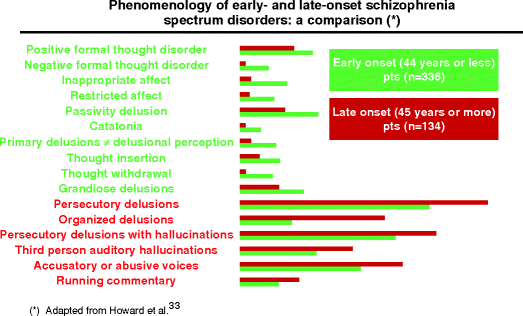
Late Onset Schizophrenia Epidemiology Clinical Profile Prognosis And Treatment Considerations Springerlink
The term very late-onset schizophrenia-like psychosis was coined by an international consensus group that met in 1998.

What is late onset schizophrenia. Late-onset schizophrenia is diagnosed when someone has schizophrenia symptoms develop between the ages of forty and sixty. What is late-onset schizophrenia. Late-onset schizophrenia is characterized by paranoid symptomatology a high femalemale ratio an elevated prevalence of hearing loss and ocular pathology schizoid or paranoid traits in premorbid personality a tendency toward chronicity and symptomatic improvement with neuroleptics.
Later life schizophrenia also showed a relatively greater association with psychosocial factors proximal to psychosis onset such as unemployment. People who have it are more likely to have symptoms like delusions and hallucinations. 3 Finally onset of schizophrenia can occur in childhood or adolescence typically after the age of 5.
As of the time of writing it is said that around 20 of schizophrenic patients develop symptoms after the age of forty. Schizophrenia can develop later in life. The period where early warning signs are experienced is called the prodromal stage.
Schizophrenia is a complex and debilitating brain disorder that typically emerges in late adolescence and early adulthood and is characterized by hallucinations and delusions commonly known as positive symptoms social withdrawal alogia and flat affect negative symptoms and cognitive disabilities. 5 The group suggested that there were differences between late-onset schizophrenia beginning at age 40 years and very late-onset schizophrenia-like psychosis that began after the age of 60 years. Late-onset schizophrenia is diagnosed after the person is 45.
Schizophrenia typically develops during this period. Clear trends are noticeable with age. Although schizophrenia is generally regarded as an illness with onset in late adolescence or early adult life a sizeable minority of patients first become ill in middle or old age.
Schizophrenia is a chronic mental health condition thats typically diagnosed in young adults people in their 20s and early 30s. A longitudinal positron emission tomography study found the antipsychotic dosage can be successfully reduced in over 80 of patients with stable late-life schizophrenia. Paranoid psychosis very-late-onset schizophrenia-like psychosis and late-onset schizophrenia disorders is an incomplete list of designations used to refer and categorize primary psychosis which begins later in life Kraepelin 1904.
Diagnosis usually occurs after an episode of psychosis. 11 Moreover a lower dosage led to fewer adverse effects and extrapyramidal symptoms less hyperprolactinemia and improved clinical symptoms through reduced D23 receptor occupancy. Older patients have characteristic differences in their background risk factors compared to.
Of course its also worth noting that not all experts agree that late-onset schizophrenia is a meaningful diagnosis. Early Signs and Symptoms of Schizophrenia Early Warning Signs of Schizophrenia. While late-onset schizophrenia meets the same DMS-IV criteria as early-onset schizophrenia there do appear to be some differences in how the disease presents.
The current article provides a clinical overview of very late-onset after age 60 schizophrenia-like psychosis VLOSLP summarizing the literature on treatment options and reflecting on the role of psychiatric-mental health nurses PMHNs. Onset after age 60 which has been defined as very-late-onset schizophrenia-like psychosis. Its onset is characterized by changes in.
Watch more How to Understand Schizophrenia videos. Late-onset schizophrenia is defined as onset of psychosis after age 45 years and it has been previously associated with a higher proportion of women high levels of occupational functioning and marital relationships as well as more severe paranoid delusions and more visual tactile and olfactory hallucinations. Diagnosis after age 40 is known as late-onset schizophrenia and it is an object of interest to mental health researchers.
In high risk patients those with a family history of schizophrenia individuals are usually monitored for early signs of the disorder however in the case of late-onset schizophrenia it is assumed that the high risk period is passed and the late onset is. Theories about the etiology of late onset schizophrenia include age-related neurological deterioration and environmentally triggered onset.

Clinical Features Of Late Onset Schizophrenia And Ftd Download Table

Clinical Features Of Late Onset Schizophrenia And Ftd Download Table

View Image

Very Late Onset Schizophrenia

A Case Of Late Onset Psychosis Consultant360

Very Late Onset Schizophrenia Like Psychosis A Clinical Update Journal Of Psychosocial Nursing And Mental Health Services

Antipsychotic Treatment Of Very Late Onset Schizophrenia Like Psychosis Atlas A Randomised Controlled Double Blind Trial The Lancet Psychiatry

Studies On The Psychopathology Of Late Onset Schizophrenia Download Table

Risk Factors In Early And Late Onset Schizophrenia Sciencedirect
Pdf Late Onset Schizophrenia An Overview Semantic Scholar

Very Late Onset Schizophrenia Like Psychosis A Clinical Update Journal Of Psychosocial Nursing And Mental Health Services

A Case Of Late Onset Psychosis Consultant360

Very Late Onset Schizophrenia Like Psychosis A Clinical Update Journal Of Psychosocial Nursing And Mental Health Services
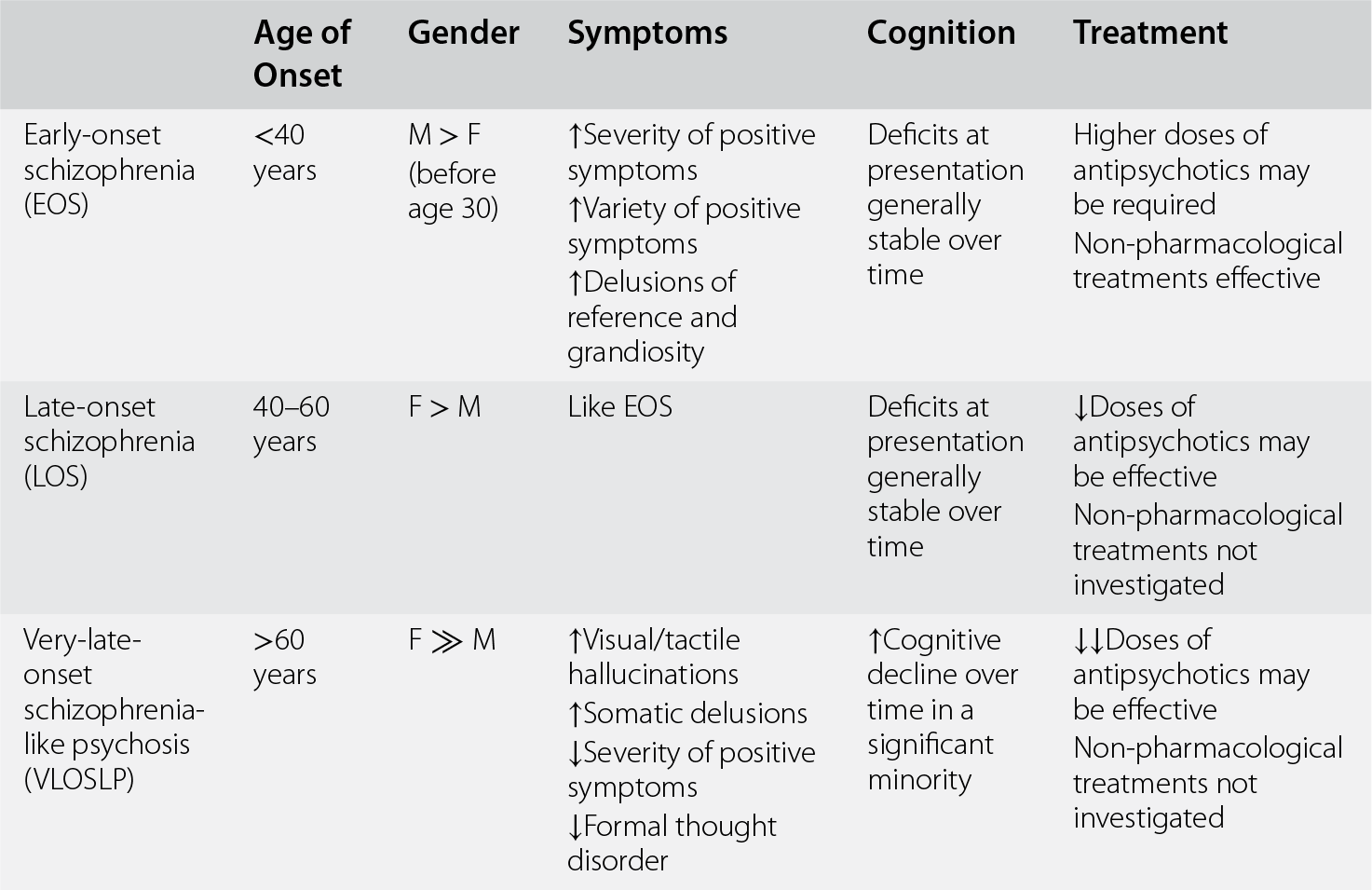
Epidemiology Historical Background Illness Phenomenology And Diagnostic Issues Section 1 Schizophrenia And Psychoses In Later Life