However they may cause pain after their application. Polycarboxylate Cement standards Pulpitis chemically induced Zinc Zinc Oxide-Eugenol Cement standards Zinc Phosphate Cement standards.
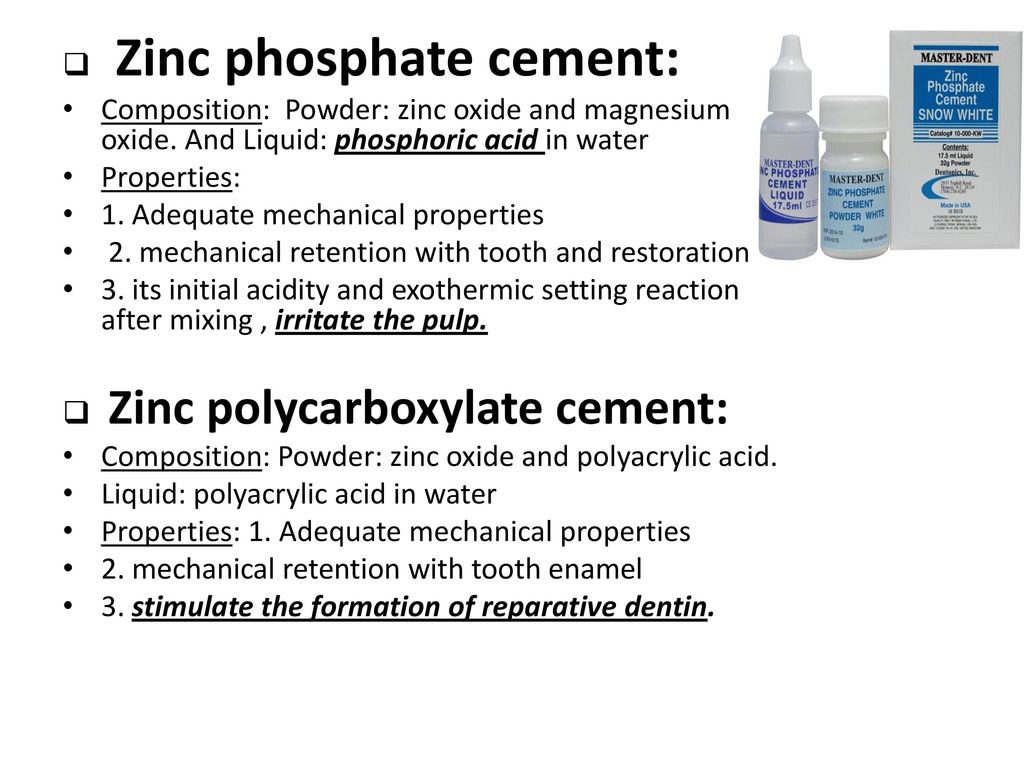
Dental Material Dental Cements Z Ppt Download
Jendresen MD Trowbridge HO.

Compared with zinc phosphate cement polycarboxylate cement has. 2 The adhesive strength of the polycarboxylate. The rate of gain of strength initially is s10w It has been demonstrated that fluoride is released by these cements2223for periods of at least 12 months. Manipulation of zinc phosphate cement.
The solubility of cements decreased by 38 for GIC 33 for ZnPO 4 50 for PMCR 29 for PC and 17 for RMGIC. The structure of zinc phosphate and zinc polycarboxylate cement used in crown and bridge fixed prosthodontics and the effect of adding stannous fluoride on its characteristics. Zinc poly F cement is used for permanent cementation of ceramic restorations and metallic crowns.
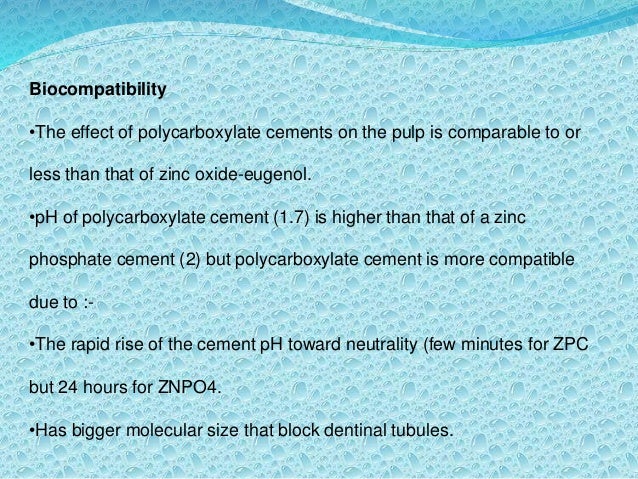
Polycarboxylate cements have good pulp compatibility. Biologic and physical properties of a zinc polycarboxylate cement. The purpose of the present investigation was to compare histologically pulpal reactions beneath inlays cemented with either a zinc phosphate or a polycarboxylate cement.
The following results were obtained. 7 8 0 Recently glass ionomer cement has been made avail-. Can also be us.
Compared with zinc-phosphate cement polycarboxylate cement has A. The adhesive strengths of four commercial polycarboxylate cements to five dental casting alloys were compared with the strength of a conventional zinc phosphate cement. GICs are also doped with some metals such as silver which.
Glass ionomer cements GIC have a final higher compressive strength 140 MPa than zinc polycarboxylateZPC or zinc phos- phate ZP cements but a similar tensile strength and a higher stiffness modulus of elasticity than the for- mer. The compressive strength of zinc polycarboxylate is inferior to zinc phosphate cement its tensile strength is higher and the overall retention is inferior to zinc phosphate cements. As a result zinc polycarboxylate is not used often on implant abutments as a definitive cement.
In this respect the zinc phosphate cements do not present this type of reaction and are less toxic to cells than the silicophosphate cements. The 24 hour compressive strength is lower than that of zinc phosphate however the tensile strength is about 40 higher than that of zinc phosphate. The modulus of elasticity of zinc polycarboxylate cement is about 13rd that of zinc phosphate cements mixed to.
About Press Copyright Contact us Creators Advertise Developers Terms Privacy Policy Safety How YouTube works Test new features Press Copyright Contact us Creators. Manipulation of zinc polycarboxylate cement. The mean fracture strength standard deviation and associated Weibull Moduli m of encapsulated cements were determined by compressive fracturing 20 cement.
A scanning electron microscopic study. 4505848 PubMed - indexed for MEDLINE Publication Types. Mixed cement is used for permanent luting of indirect restorations such as dental crowns and bridges orthodontic band.
One advantage of polycarboxylate over zinc phosphate cements is that they are relatively nontoxic to vital tissue. Have a higher adhesive strength than zinc phosphate. GICs can be used as a filling material for cavity bases and root canal fillings among others.
It is easy to handle even when mixing large quantities. This was followed by PC zinc phosphate and GIC to various time intervals of immersion. The polycarboxylate cement is an alternative where pulp reactions are expected to occur and the load on the restoration.
Polycarboxylate cement has less strength different flow properties and a shorter working time but excellent biocompatibility. Can also be us. Zinc phosphate cements are commonly supplied as two components powder and liquid and the proportions of the constituents are determined by operator experience.
Once set the cement has a lower modulus and is therefore slightly more elastic and less likely to fracture under heavy load. In the contralateral teeth under 39 inlays cemented with zinc. The PMCR cement Principle-Dentsply had shown lowest solubility to water at the given time intervals of immersion.
Zinc phosphate cement has acceptable strength working time and biological properties. While it appears thick after mixing the cement is more fluid and it exhibits shear thinning under load allowing restorations to be seated completely under pressure. Compared with zinc-phosphate cement polycarboxylate cement has longer working time lower film thickness increased compressive strength superior biologic compatibility.
A capsulated system which is mechanically mixed has been marketed and this study investigated the performance of the encapsulated cement system. They also have a somewhat lower compressive strength 3 6 than zinc phosphate cements. The compressive strength of zinc polycarboxylate is less than that of zinc phosphate cement.
1 The polycarboxylate cements showed adhesion that was four to 12 times greater than that of the zinc phosphate cement to all alloys tested. No inflammatory reaction was seen beneath any of the 39 deep cavity preparations in teeth without pulpal lesions and with an inlay cemented with polycarboxylate cement. Dental Cementsstandards Dental Pulpdrug effects.
Zinc Phosphate Polycarboxylate Dental Material Humidity

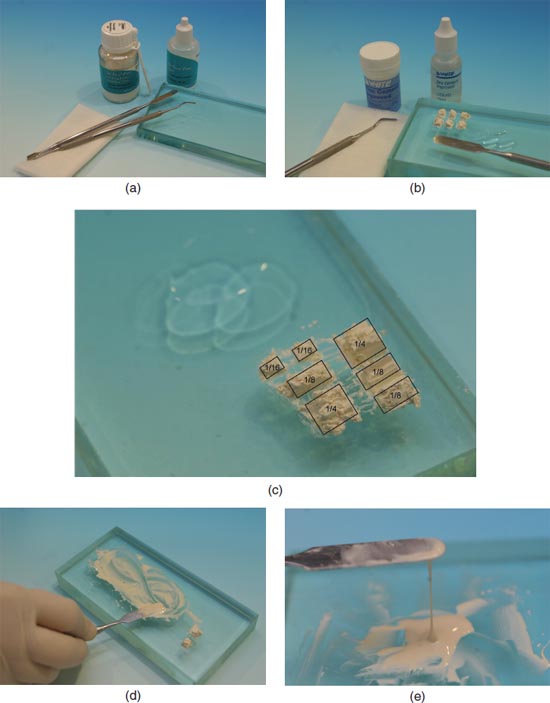
8 Dental Cements Pocket Dentistry

Dental Cements
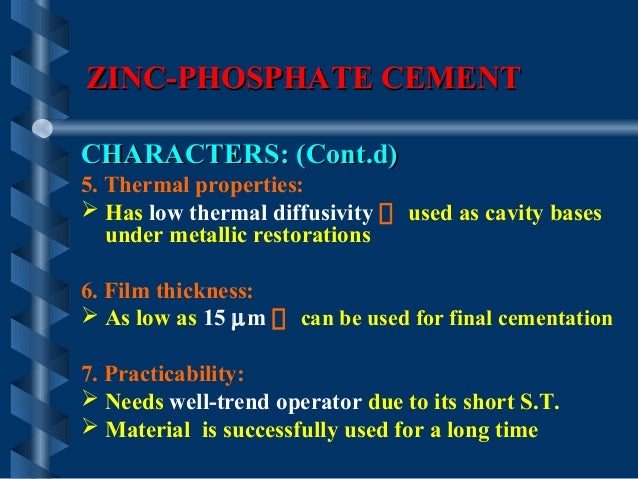
Research Of Cement

Polycarboxylate Cement An Overview Sciencedirect Topics
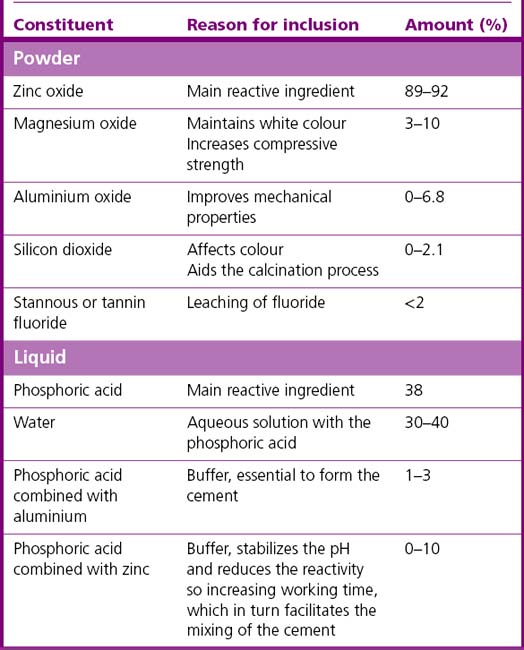
12 Other Dental Cements Pocket Dentistry
Cement 2
Dental Cements
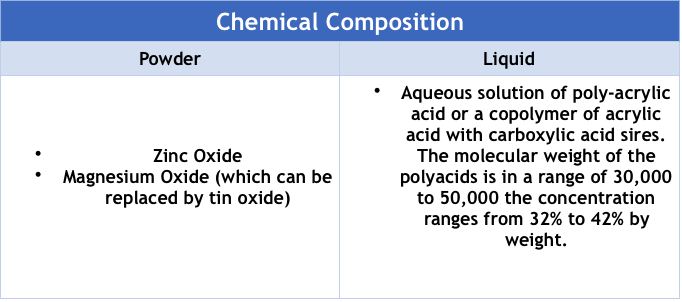
Everything You Need To Know About Dental Cements Iii Zinc Polycarboxylate Cement Dental Supplies And Equipment Dentaltix
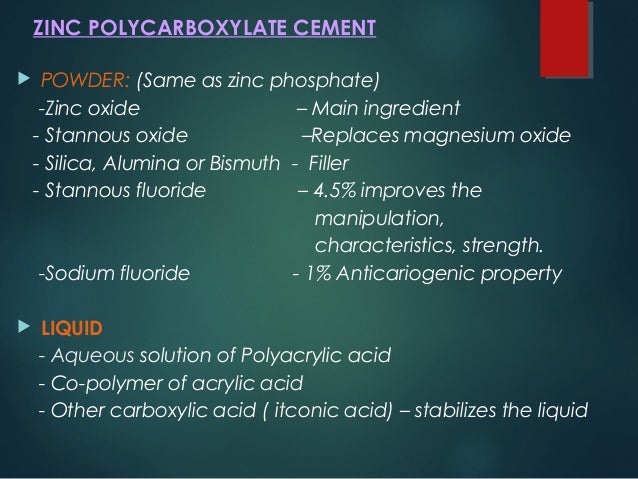
Dental Cements

Rola Shadid Bds Msc Associate Fellow Aaid Ppt Video Online Download

Dental Cements Learn Easy Dentistry
Dm Cements Flashcards Cram Com
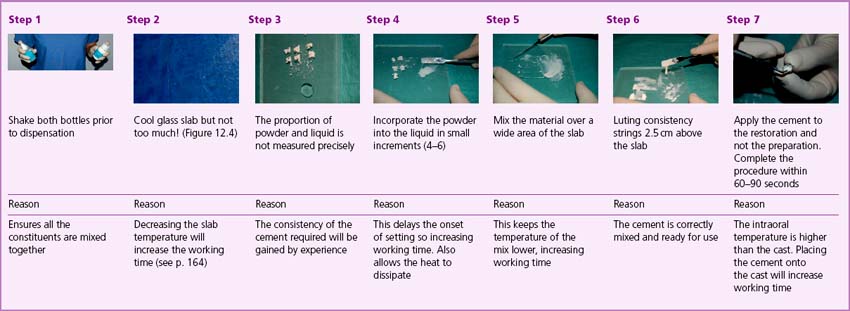
12 Other Dental Cements Pocket Dentistry