Crosslinked unlabeled enzyme-substrate complex was purified fromgelslices andanalyzed withreversetranscriptase byextension fromdeoxyribonucleotide primerscomplementarytoMlRNAand to pTyrSsp 11 12. When the enzyme is bonded to the substrate we call this the enzyme-substrate complex.
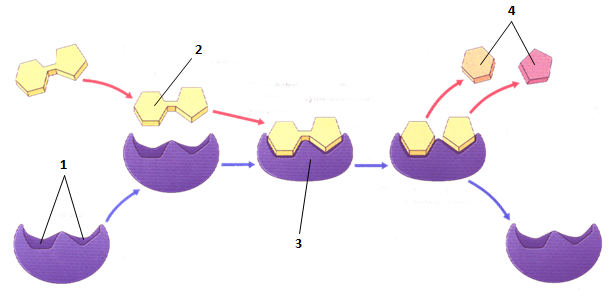
The Diagram Below Shows One Theory Of Enzyme Action Describe And Explain What Is Happening At Each Stage What Enzyme Theory Does This Represent Socratic
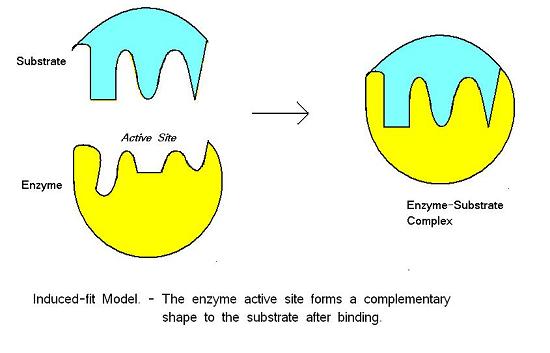
This flexible model allows the enzyme to modify its conformation when in contact with the substrate adapting to it and orienting essential residues to obtain the optimal conformation to form the ES complex.
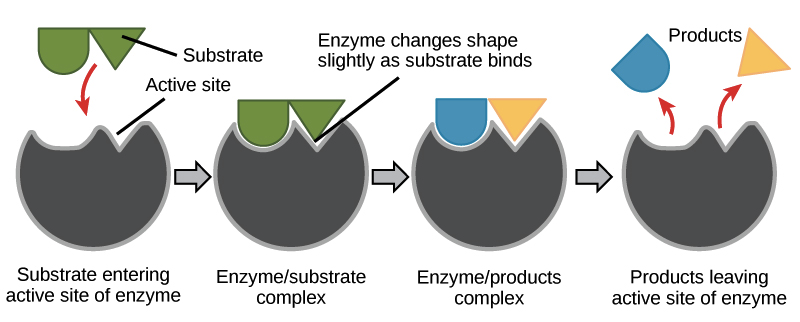
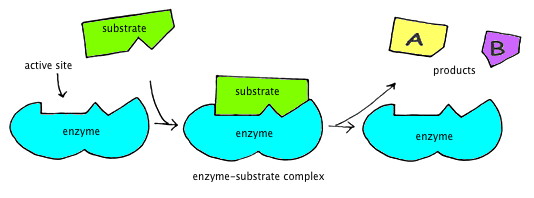
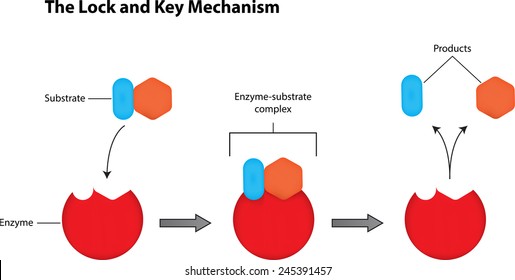
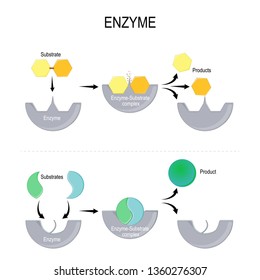
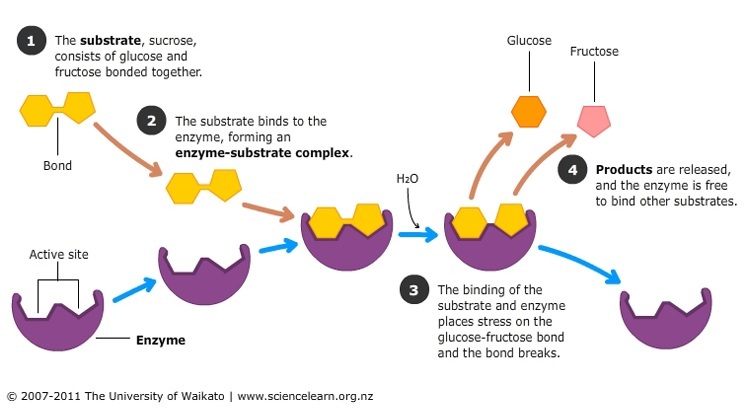
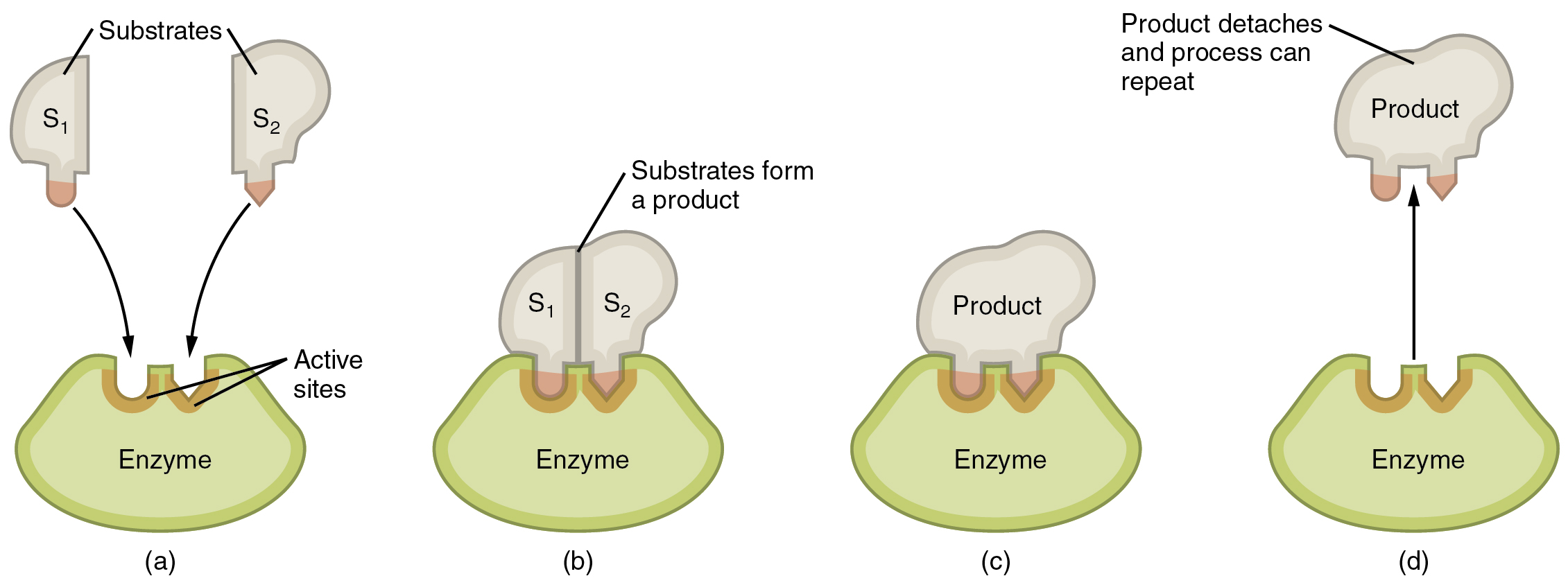
Enzyme substrate complex labeled. The substrate is transformed into one or more products which are then released from the active site. Many enzymesubstrate reactions follow a simple mechanism that consists of the initial formation of an enzymesubstrate complex ES which subsequently decomposes to form product releasing the enzyme. Enzyme-substrate complex A temporary complex formed when an enzyme binds to its substrate molecules.
Enzymes also promote chemical reactions by bringing. Enzymes are substances that play a crucial role in carrying out biochemical reactions. The activity of an enzyme is influenced by certain aspects such as temperature pH co-factors activators and inhibitors.
Substrate reactants enzyme active site transition state enzyme substrate complex product B. In the case of a single substrate the substrate bonds with the enzyme active site and an enzyme-substrate complex is formed. Draw a labelled diagram based on relevant molecules selected from the diagram above to explain how this occurs.
Label the following in the diagram below. An enzyme is a protein that functions as a biological catalyst a substance that speeds up a chemical reaction without being changed by the reaction. Enzymes lower the activation energy of a reaction by forming an intermediary complex with the substrate.
For example sucrase 400 times the size of its substrate sucrose splits the sucrose into its constituent sugars which are glucose and fructose. Enzyme- substrate complex Enzyme molecule Substrate Active site Product Cofactor. Q6 a The diagrams represent an enzyme its substrate and two other molecules A and B.
This complex lowers the activation energy of the reaction and promotes its rapid progression by providing certain ions or chemical groups that actually form covalent bonds with molecules as a necessary step of the reaction process. Draw and label the enzyme products and active site after enzymatic action. I can describe the properties of enzymes A.
The addition of a non-competitive inhibitor will prevent the formation of an enzyme-substrate complex. Enzymes catalyze chemical reactions involving the substrates. Identical experiments were also performed with other derivatives ofthe precursor to tRNATYr lacking the 3.
In a chemical reaction the step wherein a substrate binds to the active site of an enzyme is called an enzyme-substrate complex. This type of metabolic process is called catabolism the breaking down of complex molecules into simpler molecules. When the substrate binds to the enzyme it produces conformational changes in the molecule.
For example the enzyme acetylcholinesterase catalyzes the decomposition of the neurotransmitter acetylcholine to choline and acetic acid. Draw the substrates label the enzyme- substrate complex and draw the products of an enzyme-catalyzed synthesis reaction. In the case of more than one substrate these may.
Spondto crosslinked enzyme-substrate complex. If they are not in the perfect optimum temperature or pH they break down or denature. The active site is then free to accept another substrate molecule.
Enzymes are highly specific catalysts for biochemical reactions with each enzyme showing a selectivity for a single reactant or substrate. This complex is called an enzyme-substrate complex. Label the pertinent features of the figure showing how an enzyme functions.
This optimum zone is different for each enzyme and from species to species and it depends. This complex lowers the activation energy of the reaction and promotes its rapid progression by providing certain ions or chemical groups that actually form covalent bonds with molecules as a necessary step of the reaction process. Ive given you the enzyme to start with.
Once the reaction is complete the enzyme releases the. The highly complex organization of living systems requires constant input of energy and the exchange of macromolecules. Enzyme-Substrate Complex When an enzyme binds its substrate it forms an enzyme-substrate complex.
When an enzyme binds its substrate it forms an enzyme-substrate complex. Like all proteins enzymes are very temperamental. Lock and key model Enzymes are folded into.
Once the substrate is locked into the enzyme the two green substrate pieces may be easily pulled apart. Only the appropriate substrate can induce the precise conformational change needed for catalysis. Although the substrate model changed in this reaction what changes did you observe in the.
DESCRIBE the structure of the enzyme.
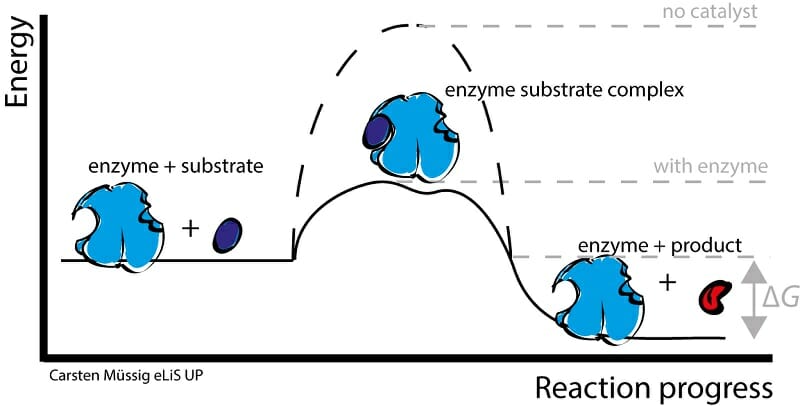
Enzyme Substrate Complex Definition Examples Biology Dictionary
Verriegelungsund Schlusselmodell Enzyme Substrat Complex Stock Vektor Art Und Mehr Bilder Von Baustelle Istock


Enzyme Biological Vector Illustration Diagram Enzymes Biology Teaching Biology Biology Notes
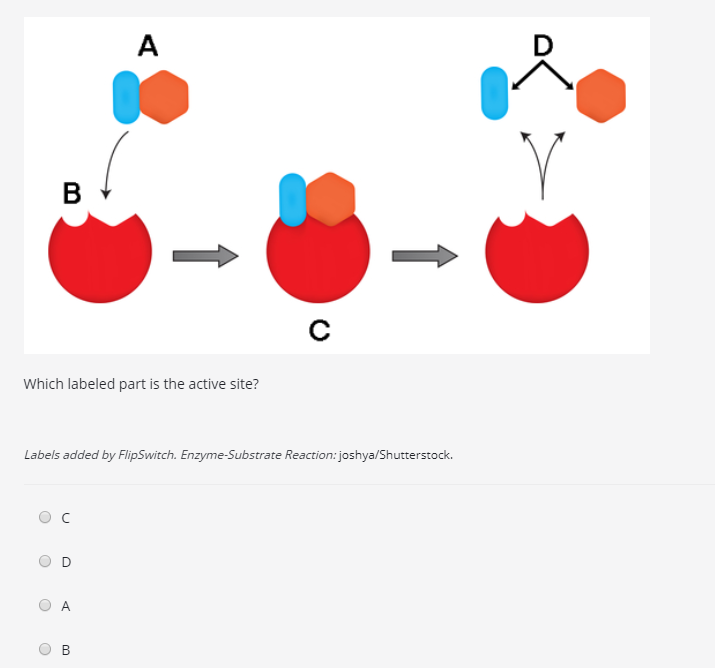
Solved Which Labeled Part Is The Active Site Labels Adde Chegg Com
Enzymes And Reaction Rates
Enzyme Substrate High Res Stock Images Shutterstock
Enzyme Substrate Complex High Res Stock Images Shutterstock

Enzyme Substrate Complex An Overview Sciencedirect Topics

Diagram Diagram Of An Enzyme Substrate Reaction Full Version Hd Quality Substrate Reaction Repairdiagrams La Fiaschetteria It
Enzymes Mhcc Biology 112 Biology For Health Professions
Digestive Enzymes Science Learning Hub
File 227 Steps In An Enzymatic Reaction 01 Jpg Wikimedia Commons

Enzyme Substrate Complex Diagram Quizlet
Enzymes And The Active Site Article Khan Academy